
Networking Solutions
We provide networking solutions, including hardware and software, to enable secure and reliable communication between devices.
Networking Solutions


Routing and Switching Solutions
_Routing is the process of selecting and defining paths for IP-packet traffic within or between networks as well as the process of managing network traffic overall.
_Switching in IT and computer networking is the transfer of data packets, or blocks of data, through a network switch. Switches transfer data from source ports on devices such as computers to destination ports on devices such as routers. Routing
Routing involves directing data packets between different networks. Routers, the devices that perform routing, determine the optimal path for data to travel from the source to the destination, often across multiple networks. They use various routing protocols and algorithms to make these decisions, ensuring efficient and accurate delivery of data.

Wireless Solutions
A wireless local-area network (LAN) uses radio waves to connect devices such as laptops and mobile phones to the Internet and to your business network and its applications.
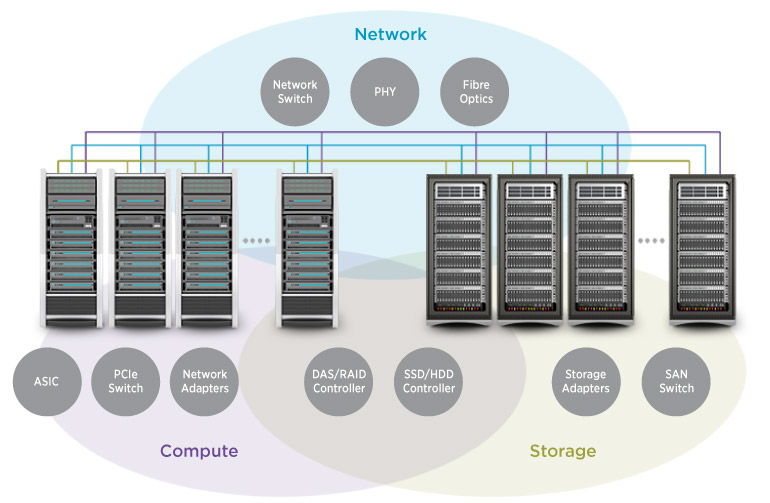
Data Center Networking
A data center network consists of switches, routers, and other hardware components that work together to provide the connectivity and security needed to run applications and process data.

Software Defined-WAN (SDWAN)
"SD-WAN is a software-defined approach to managing the WAN.
Key advantages include:
- Reducing costs with transport independence across MPLS, 4G/5G LTE, and other connection types.
- Improving application performance and increasing agility.
- Optimizing user experience and efficiency for software-as-a-service (SaaS) and public-cloud applications.
- Simplifying operations with automation and cloud-based management."
Software Defined-Network (SDN)
Software‑Defined Networking (SDN) is a software‑based approach to controlling and managing networks by separating the control plane from the data plane.
Key advantages include:
-Centralizing network intelligence in a controller for easier, consistent management.
-Enabling programmability and automation to reduce manual configuration and deployment time.
-Increasing flexibility and agility to adapt quickly to changing traffic and application demands.
-Simplifying operations through a single interface for configuration, monitoring, and troubleshooting.
-Improving network efficiency by optimizing resource usage and forwarding decisions.

Load Balancing
Load balancing is a technique used to distribute network traffic across a pool of servers known as a server farm. It optimizes network performance, reliability and capacity, reducing latency as the demand is equally distributed among multiple servers and compute resources.
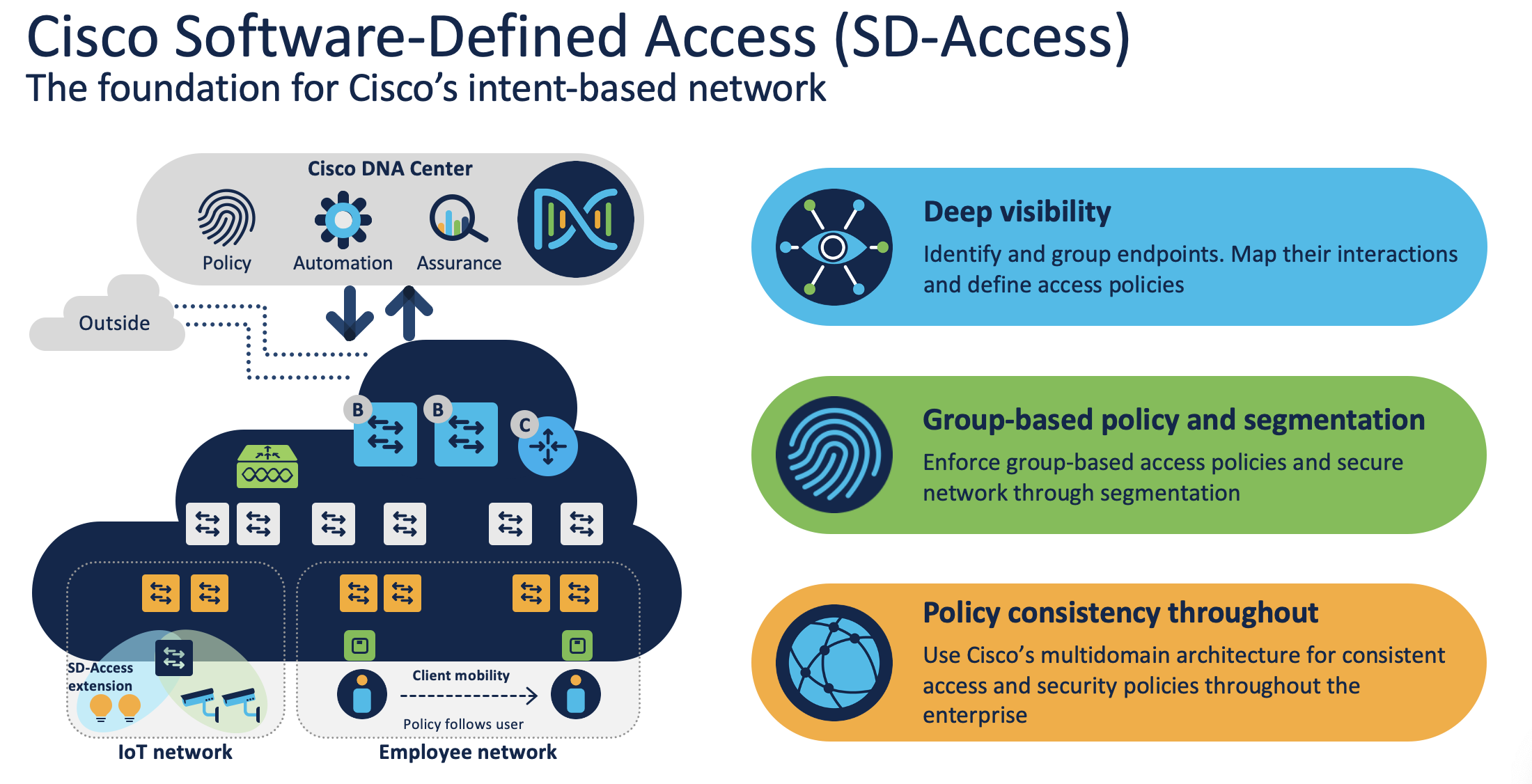
Software Defined-Access (SDA)
Software Defined‑Access (SDA) is a software‑defined approach to automating and securing campus network access through a unified fabric and centralized control.
Key advantages include:
Automating network provisioning through centralized policy‑based management.
Enforcing identity‑based access for consistent user and device policies.
Enhancing security and segmentation across wired and wireless networks.
Simplifying operations with integrated visibility, analytics, and assurance
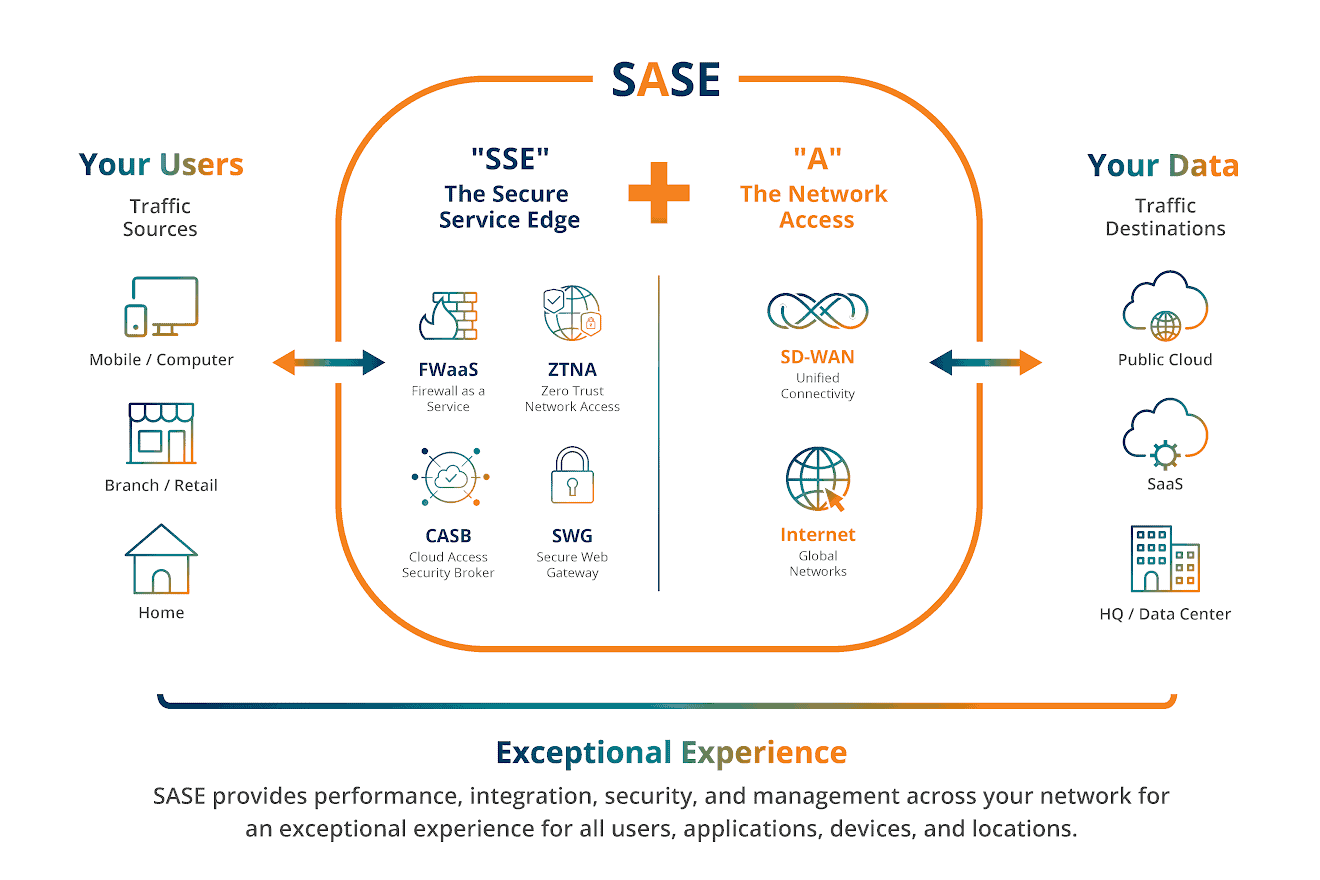
Secure Access Service Edge (SASE)
Secure access service edge (SASE) is an architecture that delivers converged network and security as a service capability including SD-WAN and cloud native security functions such as secure web gateways, cloud access security brokers, firewall as-a-service, and zero-trust network access.
Network Monitoring Tool
A Network Monitoring Tool is software used to observe and analyze the performance and health of a computer network. It continuously tracks traffic, device availability, and connection quality to ensure the network operates smoothly, helping administrators detect issues early and maintain stable, efficient network operations
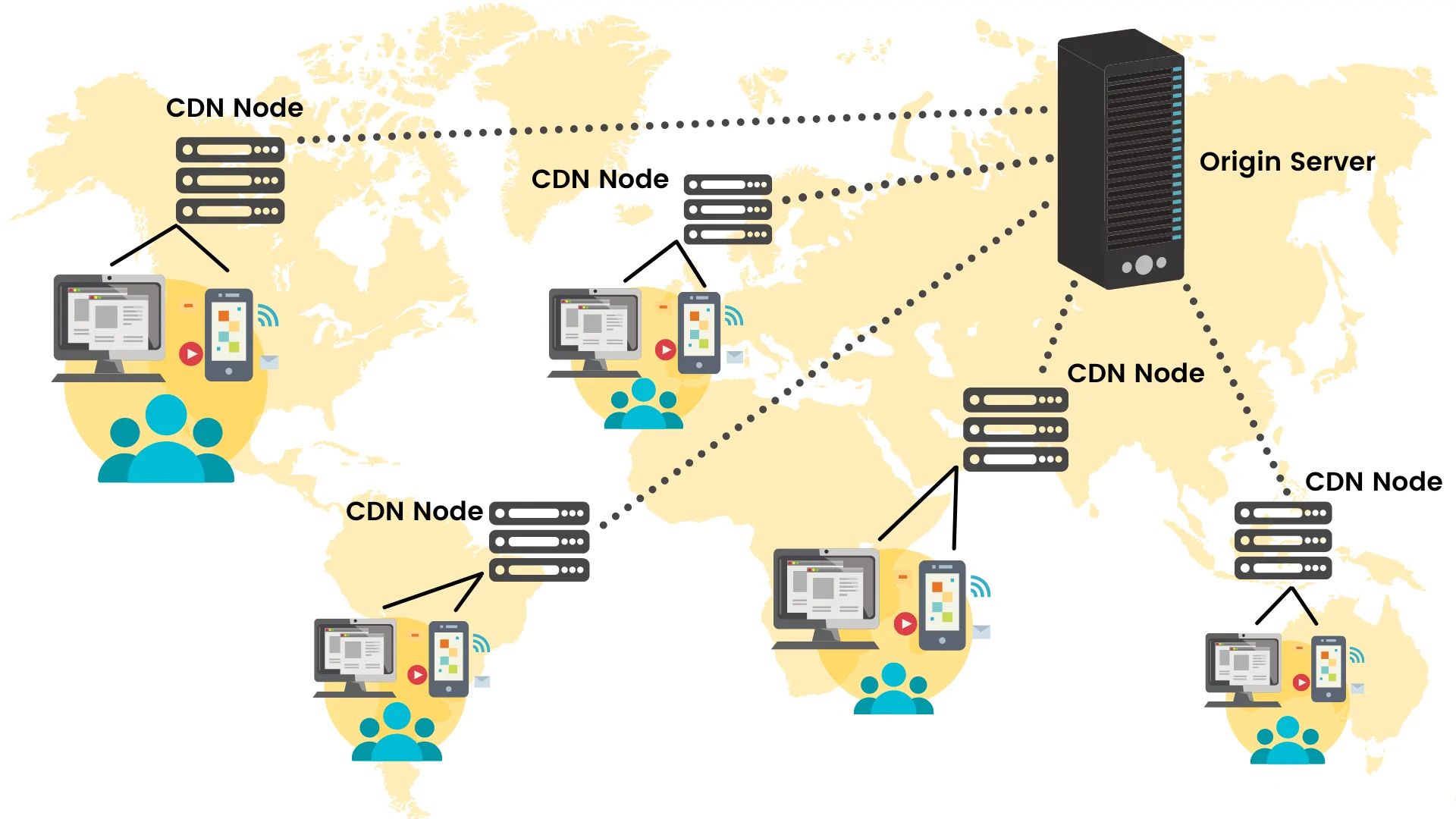
Content Delivery Network (CDN)
A Content Delivery Network (CDN) is a globally distributed network of servers designed to deliver web content to users from the location closest to them. By caching files such as images, videos, and webpages on multiple edge servers worldwide, a CDN reduces loading time, lowers latency, and improves overall website performance and reliability.